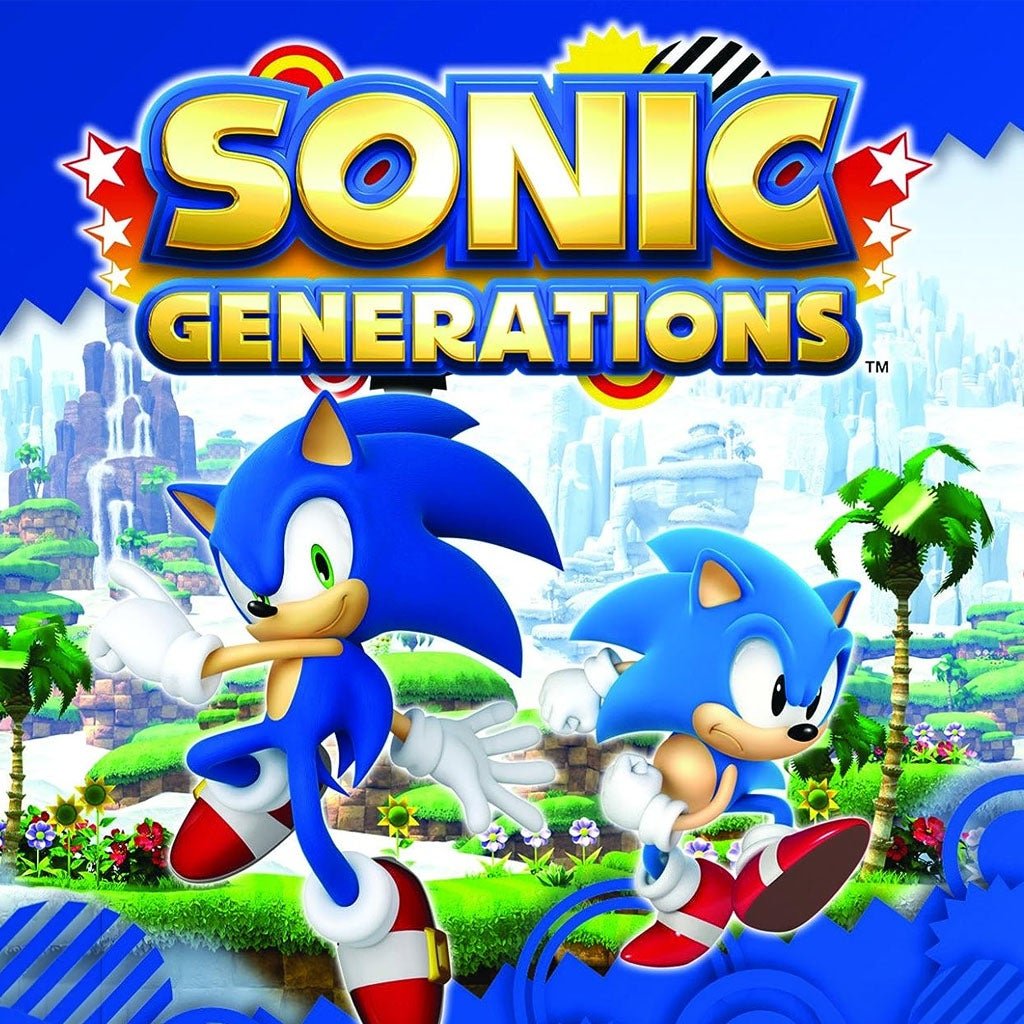
When Sonic the Hedgehog celebrated his 20th anniversary, fans were treated to a nostalgic trip through time. Sonic Generations on consoles and PC delivered a triumphant "best of Sonic" experience, a love letter to two decades of speed. But what about its handheld sibling? This comprehensive Sonic Generations 3DS Review & Analysis dives deep into the Nintendo 3DS version, revealing an adventure that, while conceptually exciting, often feels like a hurried echo of its more polished counterparts.
If you're wondering whether to revisit Green Hill Zone on your dual-screened device, or if this particular time-traveling romp is worth your precious gaming hours, you’ve come to the right place. We'll unpack everything from the game's ambitious premise to its execution, helping you decide if this celebration truly hits the mark or if it's best left in the past.
At a Glance: Sonic Generations 3DS
- Premise: A 20th-anniversary "Best of Sonic" title, featuring Modern and Classic Sonic teaming up across iconic levels.
- Story: Simple, predictable time-travel narrative with Sonic saving friends and restoring color to worlds.
- Gameplay: Play as Classic Sonic (2D platforming) or Modern Sonic (2D levels with 2.5D camera). Both versions feel less refined than their counterparts.
- Bosses: Mostly criticized as boring 2D races or mediocre executions, though the final boss offers a significant challenge.
- Special Stages: Fun and challenging, but suffer from unoriginal level design toward the end.
- Level Selection: Fewer levels than the HD version, including some exclusive to DS Sonic games.
- Graphics & Sound: Visually strong for a 2011 3DS title; good soundtrack, but lacks voice acting in cutscenes.
- Length & Value: Short main story (a few hours to 8 hours for S ranks) makes its initial $30 price tag feel steep.
- Overall: An unpolished, simpler experience. Recommended for big fans who only own a 3DS; otherwise, the console/PC version is superior.
The Hedgehog's Big 20th: A Familiar Tale in a New Dimension
In 2011, Sonic Team aimed to celebrate two decades of blue blur antics by bringing together the old and new. The central premise of Sonic Generations is a delightful concept: Modern Sonic, in all his booster-powered glory, gets pulled into a time warp, only to meet his pixelated, plumper past self – Classic Sonic. Together, they must navigate iconic levels from the series' history, restored by a mysterious entity, to defeat a new threat that’s draining color and life from their worlds.
The story kicks off at Sonic’s birthday party (because of course it does), which is rudely interrupted by a monster that kidnaps his friends and literally sucks the vitality out of their surroundings. This sets the stage for our two heroes to journey through the "White Place," a realm where time and place have been distorted and removed. While the narrative provides a functional excuse for the cross-era fun, you won't find any profound twists here. The story's progression and ultimate conclusion are, much like a well-worn loop-de-loop, entirely predictable. It’s a backdrop, nothing more, to the real star of the show: the levels themselves.
Two Sonics, Two Flavors (Mostly)
The core appeal of Sonic Generations 3DS lies in its dual-character gameplay. You get to control both Classic Sonic and Modern Sonic, each with their own distinct mechanics and level designs. This approach attempts to cater to different generations of fans, but the execution on the handheld leaves something to be desired compared to its console brethren.
Classic Sonic's Quest for Nostalgia (with a Hitch)
For those who grew up with the Sega Genesis, Classic Sonic represents pure, unadulterated 2D platforming. In this version, you primarily jump, collect rings, perform a spin dash, and utilize shields, just as you would in the 16-bit era. The levels designed for him are strictly side-scrolling, aiming to evoke that retro feel.
However, the nostalgia trip isn't entirely smooth. Classic Sonic in Sonic Generations 3DS is often described as feeling slow and, frankly, mediocre. The physics, a cornerstone of the original games, feel imperfect here. Jumps can feel floaty, and momentum isn't always as precise as veterans might expect. What truly breaks the "classic" formula, however, is the unlockable Homing Attack. This ability, a staple of Modern Sonic, feels out of place with Classic Sonic's design philosophy, altering the intended challenge and precision of traditional platforming. If you're looking for a perfect recreation of those classic physics, the HD version of Sonic Generations handles this significantly better.
Modern Sonic's Rush-Inspired Speed (A Brighter Spot)
Modern Sonic’s gameplay style on the 3DS draws heavily from the Sonic Rush series, also developed by Dimps for Nintendo DS. These levels are still fundamentally 2D but utilize a 2.5D camera, giving a sense of depth and dynamic movement. Here, the emphasis is squarely on speed, boosting through environments, and chaining together aerial attacks.
While these mechanics are more basic than the sophisticated flow of the Sonic Rush titles, Modern Sonic's sections are generally considered better designed than Classic Sonic's in this particular game. They feel faster, more fluid, and offer a more consistent challenge. That said, don't expect to master them instantly; learning the intricate layouts and optimal paths to maintain speed can still be quite challenging, demanding precise timing and quick reflexes. Despite its simplicity compared to Rush, Modern Sonic’s levels provide a more engaging experience within the constraints of this take on Sonic Generations.
Boss Battles: Missed Opportunities and a Glimmer of Hope
No Sonic game is complete without epic boss confrontations, and Sonic Generations 3DS features a roster of familiar faces from throughout the franchise’s history. You’ll square off against rivals like Metal Sonic, Shadow the Hedgehog, and Silver the Hedgehog. Unfortunately, these encounters are largely criticized for being rather uninspired.
Many of these rival battles boil down to boring, simple 2D races. Instead of dynamic fights that test your skills, you're often just trying to outpace your opponent across a relatively straightforward track. This design choice strips away much of the potential for excitement and strategic engagement.
Beyond the rival races, other bosses such as Big Arm from Sonic the Hedgehog 3, the menacing Biolizard from Sonic Adventure 2, and the imposing Egg Emperor from Sonic Heroes make appearances. While these offer a bit more variety in terms of gameplay style and difficulty, they rarely feel "epic" and their execution is often described as mediocre. They provide challenges, certainly, but few are particularly memorable for their ingenuity or exhilarating design.
However, there is a silver lining: the final boss. This climactic battle stands out as a genuinely great challenge. It cleverly incorporates the ability to swap between 2D and 3D perspectives, demanding adaptability and quick thinking. While it can be quite long due to its difficulty, it offers a satisfying culmination to the adventure and is arguably the most memorable boss encounter in the entire game on Nintendo 3DS.
Special Stages and Chaos Emeralds: A Necessary Diversion
To complete Sonic Generations 3DS, you'll need to collect the iconic Chaos Emeralds. These are obtained by clearing Special Levels, which make a return in this installment. If you’ve played Sonic Heroes, you’ll find these special stages familiar, as they bear a strong resemblance to the ones found in that game.
Played exclusively as Modern Sonic, these stages are generally considered fun and offer a great challenge, especially if you're aiming for those coveted S ranks – which often require near-perfect runs. They provide a welcome break from the main platforming action, testing your precision and speed in unique ways.
However, the design of these special stages isn't without its criticisms. While enjoyable, their level layouts are described as "normal" or uninspired. Furthermore, the last two special stages are noted for being nearly identical to their original appearances, which can feel a bit lazy and less creative than one might hope for a celebratory title. Despite these shortcomings, they serve their purpose by providing a compelling reason to push your skills and obtain the necessary power-ups.
Worlds Apart: A Look at the Level Design and Selection
One of the significant differences between the 3DS version and its HD counterpart is the breadth of content. Sonic Generations 3DS offers fewer levels than the console/PC version, which might disappoint players expecting a full-scale celebration. While it brings back classics, some choices feel less inspired.
A prime example is the inclusion of Green Hill Zone, a staple of the series. While iconic, the 3DS version for Classic Sonic largely ports the original level without significant changes or new ideas. This feels like a missed opportunity to reimagine a beloved stage for a new handheld experience, especially when the console version offered fresh takes.
The level roster includes a mix of familiar and unique zones:
- Green Hill Zone
- Casino Night Zone
- Mushroom Hill Zone
- Emerald Coast
- Radical Highway
- Water Palace
- Tropical Resort
A notable benefit for handheld fans is that the game includes exclusive levels drawn from other DS Sonic titles, providing a fresh perspective that isn't found in the HD version. However, these exclusive additions don't fully compensate for the overall feeling of simplicity and lack of polish. Throughout many of the stages, players might encounter awkward enemy or spike placements. These unfortunate design choices can abruptly disrupt the flow and pacing, turning what should be a smooth, speedy experience into a frustrating stop-and-go affair.
Beyond the Main Story: Missions and Unlockables
While the main story of Sonic Generations 3DS might be brief, the game attempts to extend its longevity through additional modes and unlockables. One significant feature is the Mission mode, which leverages the Nintendo 3DS's Streetpass functionality.
Players can share and acquire missions with others they pass by, accumulating a total of 100 different challenges. Each mission typically involves completing a specific objective within a level, adding replayability and encouraging interaction with the game's various mechanics. For those without frequent Streetpass opportunities, missions can often be acquired through other means within the game, though the primary design encourages the social aspect.
Completing these missions isn't just for bragging rights; it unlocks various game extras. These include character models, a selection of music tracks to listen to, and concept artworks. For dedicated fans, these unlockables provide a tangible incentive to dive back into stages and master specific challenges, adding a layer of depth beyond merely clearing the main campaign. It gives players a reason to keep enjoying the 3DS version of Sonic Generations even after the credits roll.
Visuals, Sounds, and the 3D Effect: A Handheld Presentation
For a Nintendo 3DS title released in 2011, Sonic Generations 3DS generally looks quite good. Developed by Dimps, known for their work on the Sonic Rush series, the game utilizes a 2.5D style effectively, giving depth to its side-scrolling environments without sacrificing the visual clarity often associated with early 3D handheld games.
The 3D effect of the Nintendo 3DS itself adds a noticeable layer of depth to the stages, making platforms and enemies pop out slightly. However, this visual enhancement comes with a caveat: on the larger 3DS XL model, setting the 3D slider to its highest can sometimes lead to blurriness, potentially detracting from the crispness of the visuals. Despite this, the game’s frame rate remains impressively optimized, maintaining a smooth experience even during fast-paced sequences, which is crucial for a Sonic title.
One area where the 3DS version clearly differs from its console counterpart is in its presentation of cutscenes. While the HD version featured fully voiced, cinematic videos, Sonic Generations 3DS opts for model animations accompanied by text boxes. This lack of voice acting and full-motion video can make the story feel less impactful and less "celebratory" compared to the immersive presentation of the home console versions.
The soundtrack, however, is a highlight. Featuring a mix of original compositions and excellent remixes of classic Sonic tunes, the audio experience is generally strong. Notable contributions, such as a remix of the Big Arm theme by Cash Cash, inject energy and nostalgia into the gameplay. While the overall sound design is commendable, the absence of voice acting for the characters remains a noticeable omission that diminishes the game’s overall production value.
The Price of Nostalgia: Game Length and Value
For any game, especially a handheld title, the balance between content, length, and price is crucial. Sonic Generations 3DS sadly falls short in this regard, especially when considering its initial retail price.
The game is remarkably short. A dedicated player can complete the main story, even aiming for S ranks on all stages, in approximately 8 hours. Many players report finishing the core experience in just a "few hours." For a game that launched at $30, this limited content makes it feel quite expensive. While the mission mode and unlockables add some replayability, they don't fully mitigate the feeling that the main adventure ends too quickly.
This brevity, combined with the often-criticized awkward enemy/spike placement that disrupts pacing, contributes to the overall perception of the game feeling simple and unpolished. It lacks the cohesive, refined feel of previous Dimps-developed DS Sonic games like Sonic Rush or, more significantly, the grandeur and polish of the HD console version of Sonic Generations. The game feels rushed in certain areas, with elements that could have benefited from more development time. For example, some levels don't flow as smoothly as they should, leading to frustrating moments rather than exhilarating speed.
Is It Worth Your Rings? Who Should Play This
Given its strengths and weaknesses, making a recommendation for Sonic Generations 3DS requires a nuanced perspective. It's not a universal must-play, but it certainly has its niche.
If you're looking for the definitive Sonic Generations experience, this isn't it. The console and PC versions are widely regarded as the superior way to play. They offer more levels, better physics, more polished presentation, and a generally more satisfying blend of Classic and Modern Sonic gameplay. If you have access to those platforms, that's where you should turn first.
However, if you are a big Sonic fan and the Nintendo 3DS is your only gaming device, then Sonic Generations 3DS might still be worth checking out. It offers a functional, albeit brief, romp through Sonic history. You'll get a taste of the anniversary celebration, and Modern Sonic's levels, in particular, can provide some enjoyable speed-running thrills. Just temper your expectations; anticipate a game that feels simpler and less polished than what the series is truly capable of. Don't go in expecting the same level of depth or polish as the HD versions or even Dimps' earlier, highly regarded DS Sonic titles. It's more of a fun diversion than a groundbreaking title. You can learn more about Sonic Generations for Nintendo 3DS through dedicated fan communities and detailed guides.
Pitfalls to Avoid:
- Expecting HD-level polish: The 3DS hardware and development constraints mean it won't look or play like its console brethren.
- A deep, engaging story: The narrative is merely a vehicle for the gameplay.
- Perfect classic physics: Classic Sonic’s movement is a pale imitation of the Genesis originals.
- Long-lasting content: The main story is short, making the game's initial price feel high for the content offered.
Final Verdict: A Celebration That Misses Its Mark
Sonic Generations 3DS had noble intentions: to celebrate two decades of a gaming icon on a popular handheld system. It promised a "Best of Sonic" experience, bringing together two distinct eras of gameplay. In practice, however, it delivers a game that, while functional and occasionally fun, falls short of being truly memorable or essential.
It's a game plagued by unpolished physics, particularly for Classic Sonic, and often generic boss battles. The level design, while pulling from beloved zones, sometimes feels uninspired or hampered by awkward enemy placement. The brevity of the main campaign and the lack of voice acting further detract from its value proposition, making its initial price feel steep.
Ultimately, Sonic Generations 3DS is a decent enough attempt at a difficult task, but it never quite reaches the heights of its console counterpart or even other strong Dimps-developed handheld Sonic titles. It’s a curiosity for the most ardent fans, a fleeting moment of nostalgia on the go, but not the definitive anniversary celebration the blue blur truly deserved on handhelds. If you own a 3DS and are desperate for a Sonic fix, it can provide some entertainment, but most will find a richer, more polished experience elsewhere.