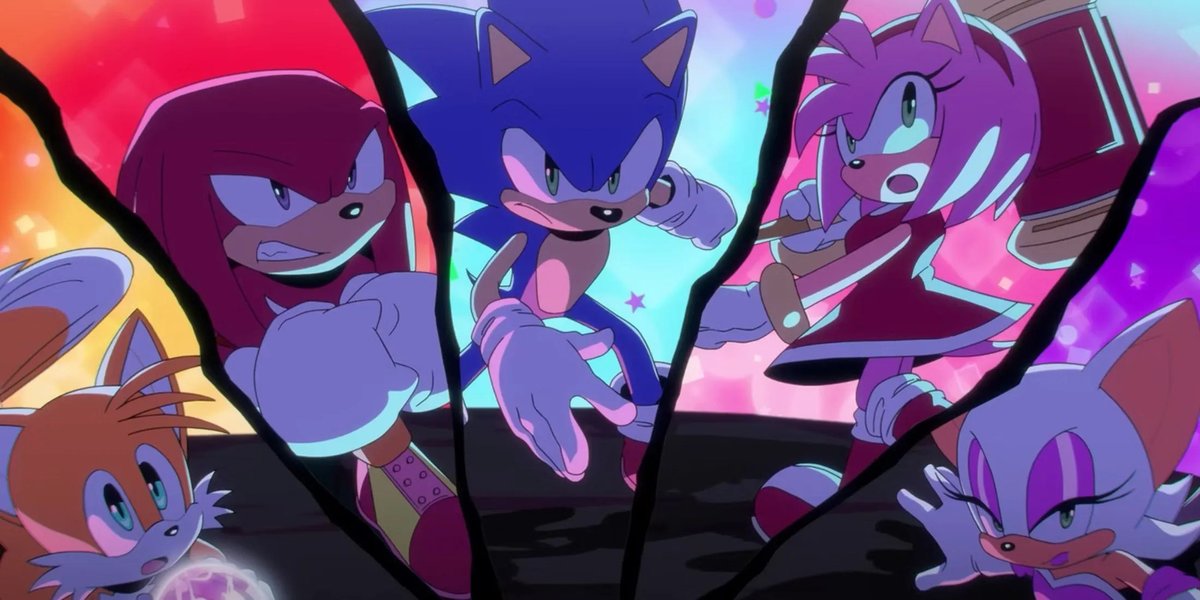
From the moment Sonic the Hedgehog first blasted onto screens in the early 90s, the blend of exhilarating speed, memorable characters, and surprisingly deep lore has been the engine of its enduring appeal. It wasn't just a game; it was an experience rooted in superior technology and a clear design philosophy that captured the imagination. Understanding the intricate tapestry of Story, Characters & Sonic Lore isn't just for superfans; it's key to appreciating how a simple blue hedgehog became a global icon, maintaining relevance for over three decades.
At a Glance: The Enduring Power of Sonic
- Speed is Paramount: Sonic's legendary velocity was born from Sega's "Blast Processing" and a deep commitment to fluid animation and physics-driven gameplay.
- Characters Drive the Narrative: Beyond Sonic, a rich cast including Tails, Knuckles, and Dr. Eggman has evolved, each adding unique mechanics and story arcs.
- A Sprawling Universe: The lore extends far beyond games, encompassing comics, multiple TV series, and films, cementing Sonic's status as a cultural icon.
- Timeline Tangles: While no official timeline exists, fan-driven efforts and game narratives reveal a complex, often experimental, evolution of the saga.
- Innovation & Iteration: Sonic Team consistently balances core kinetic thrills with cutting-edge tech, leading to both acclaimed successes and ambitious missteps.
The Genesis of a Legend: Speed, Physics, and Personality
Imagine the early 1990s. The console wars were heating up, and Sega needed a mascot to challenge Nintendo's plumber. What they delivered was Sonic, a character defined not just by his cool attitude, but by an unprecedented sense of speed. This wasn't magic; it was engineering genius. Sega's "Blast Processing" on the Genesis leveraged superior processors, a faster CPU, and specialized graphics support. This allowed for the famously fluid animation and groundbreaking parallax scrolling that made speeding through Green Hill Zone a visceral thrill.
Developer Yuji Naka, a co-creator, prioritized smooth, responsive movement above all else. This wasn't just about showing off; it was about creating a skill-based mastery over trajectory. Players weren't merely watching Sonic run; they were guiding him, making mid-air course corrections, and executing seamless transitions thanks to input buffering. Sonic Team's obsession with lower-level programming and assembly code optimization was crucial, truly distinguishing Sonic from rivals like Crash Bandicoot or "also-rans" like Bubsy the Bobcat. It was this foundation — intelligent level design, clear visual cues for guiding players, branching paths offering risk/reward, and elegantly tuned physics — that aimed to evoke the childlike exhilaration of running free.
Evolution in Three Dimensions: From Dreamcast to Open Worlds
As gaming transitioned into 3D, so did Sonic. Sonic Adventure (1998) for the Dreamcast marked a massive leap, showcasing detailed textures and large stages that redefined what a Sonic game could be. It wasn't just about pure platforming speed anymore; the game innovated by introducing multiple, varied gameplay types. You could fly and shoot as Tails, or treasure hunt as Knuckles, expanding the scope of the character-driven narrative. Sonic Adventure 2 built upon this, amplifying the speed sensation with improved complexity, dazzling visuals, a faster action tempo, motion blur, and particle effects that made every dash feel more intense.
This journey of evolution continues today. Sonic Frontiers (2022) experiments with core kineticism in richer, larger open worlds, demonstrating a willingness to push boundaries while retaining the essence of speed. Future technological integrations could include machine learning for complex ecosystems, procedural generation for content diversity, and even brain-computer interfaces for radical new inputs, adapting gameplay to individual styles via cloud computing. Across 31 years, maintaining Sonic's "blazing blue legend status" has always been a delicate balance between preserving that core kinetic thrill and embracing cutting-edge technological evolution.
A Universe Unfolding: Beyond the Green Hill Zone
Sonic's influence quickly transcended the console. The franchise expanded significantly into film and television, creating an expansive universe that deepened the lore. "Adventures of Sonic the Hedgehog" began in 1993, and by the mid-90s, five distinct American series were running concurrently. The beloved Archie Comics run lasted an impressive 24 years until 2017, followed by IDW Sonic comics now approaching triple-digit volumes.
This multimedia saturation cemented Sonic not just as a game character, but a cultural icon. Happy Meal tie-ins alone have distributed over 1 billion toys since 1991, intertwining Sonic with generations of childhood memories. Film director Tim Miller aptly noted that for many fans, Sonic feels "like family," a testament to how deeply the characters and their ongoing story resonate. This extensive media presence means the Story, Characters & Sonic Lore isn't confined to game consoles; it's a shared cultural narrative.
The Sprawling Saga: Navigating Sonic's Unofficial Timelines
One of the most fascinating aspects of Sonic's lore is its decentralized nature. Sega has never released an official, definitive timeline for the games, leaving fans to meticulously piece together chronological events. This collaborative effort often highlights the subtle connections and significant shifts across the franchise's history.
In the core classic series, Sonic often finds himself on South Island, a resource-rich location that naturally attracts his arch-nemesis, Dr. Ivo "Eggman" Robotnik. While Sonic the Hedgehog for Genesis was the first game released, many fan-collaborated timelines suggest SegaSonic the Hedgehog precedes it, depicting Robotnik kidnapping Sonic, Mighty the Armadillo, and Ray the Flying Squirrel from Christmas Island. Sonic and Tails officially team up in Sonic the Hedgehog 2, a bond that became central to the series, and Sonic encounters the formidable Knuckles the Echidna in Sonic the Hedgehog 3. Knuckles Chaotix for the 32X, while a spin-off, directly references the events of Sonic and Knuckles. The episodic Sonic the Hedgehog 4 serves as a crucial, albeit later, entry in the classic timeline, with "Episode Metal" notably introducing Metal Sonic as a playable anti-hero and Little Planet's reappearance tying it directly to Sonic CD.
Eras of Innovation and Experimentation
Sonic's journey through its various eras showcases both daring innovation and, at times, ambitious missteps.
The Leap to 3D and its Growing Pains
The series transitioned to 3D with Sonic Jam for Sega Saturn, which also gave Sonic his first design makeover by Satoshi Okano. However, it was Sonic Adventure for Dreamcast that truly launched the franchise into a new dimension. It introduced a larger cast with unique storylines and gameplay mechanics, expanding the Story, Characters & Sonic Lore dramatically.
Not every experiment was a success. Sonic the Hedgehog (2006), despite introducing fan-favorite Silver the Hedgehog and featuring ambitious time-travel elements involving Princess Elise, is largely remembered for its critical reception. Its convoluted narrative notably invalidates itself by the end, a prime example of how ambitious storytelling can falter without the tight gameplay foundation.
The "Dark Age" and Glorious Revival
Following the 2006 reboot, a period some fans refer to as the "Dark Age" included titles like Sonic and the Secret Rings, Sonic Unleashed, and Sonic and the Black Knight. While each had its unique concepts, they often deviated significantly from the classic formula.
The series began to return to its roots with Sonic Colors, which introduced the Wisp-fueled "Color Power" system, adding vibrant, temporary abilities to Sonic's moveset. This paved the way for the critically acclaimed Sonic Generations, a 20th-anniversary celebration that masterfully blended both Classic and Modern Sonic, battling the Time Eater. The game beautifully showcased the evolution of Sonic's gameplay, from 2D side-scrolling to high-speed 3D stages. If you're looking to dive into the best of both worlds, the celebrated Sonic Generations offers a fantastic perspective on the franchise's journey, even on portable platforms.
Modern Expansions and Crossovers
Sonic: Lost World borrowed elements from Colors (Wisps, Color Power) and Generations (2D/3D levels) while introducing a parkour-inspired movement system. Its narrative involved Sonic defeating Eggman and the demonic Deadly Six (Zeti) on the floating continent of Lost Hex. More recently, Sonic Mania and Sonic Forces stand as the latest chronological entries in the primary "Sonic" universe. Mania, a loving homage to the 2D classics developed with fan contributions, is hailed for its authentic feel, and its ending directly segues into Forces, a game that once again saw Classic Sonic crossing over to help Modern Sonic in a dire fight against Eggman. Experiencing Sonic Generations' anniversary celebration helps contextualize this dual-era approach that later defined Forces.
Spin-offs and Parallel Universes: The Boom and Beyond
The Story, Characters & Sonic Lore isn't monolithic; it's a multiverse. The "Sonic Boom" franchise, prominent in the mid-2010s, included games for 3DS and Wii U, alongside a popular CGI-animated television series. Crucially, this universe is entirely distinct, featuring character redesigns for Sonic and his allies, and it explicitly does not crossover with other "Sonic" titles.
Beyond the main series and "Boom," the franchise has branched into numerous spin-off titles with wildly varying mechanics. From racing games like Sonic R and Team Sonic Racing to fighting games and an RPG developed by Bioware, these titles continuously explore new facets of the characters and their world, proving the versatility of the Sonic Lore. The richness of characters like Tails, Knuckles, and Shadow has always been a strength, allowing for these diverse gameplay experiences, much like how its memorable dual-era gameplay in Sonic Generations allowed players to revisit different periods of Sonic’s history.
The Heart of the Hedgehog: Characters That Endure
The enduring strength of Story, Characters & Sonic Lore lies in its vibrant cast.
- Sonic the Hedgehog: The fastest thing alive, embodying freedom, justice, and a rebellious spirit. His core identity as a hero who doesn't wait around for trouble, but actively seeks it out, has remained consistent.
- Miles "Tails" Prower: Sonic's loyal sidekick and mechanical genius. Tails' intelligence and bravery, overcoming his initial shyness, make him an invaluable asset and a relatable character for many.
- Knuckles the Echidna: The guardian of the Master Emerald. His strength, stoicism, and occasional gullibility provide both muscle and comedic relief, forming a compelling rivalry and eventual friendship with Sonic.
- Dr. Ivo "Eggman" Robotnik: The brilliant, eccentric, and perpetually frustrated evil scientist. Eggman's schemes, driven by a desire to conquer the world and build his Eggman Empire, are the primary catalyst for nearly every conflict, making him one of gaming's most iconic villains.
- Shadow the Hedgehog: The "Ultimate Life Form." His dark past, powerful abilities, and complex moral compass add a layer of anti-heroism and philosophical depth to the narrative.
- Amy Rose: Sonic's self-proclaimed girlfriend, fiercely loyal and surprisingly strong. Her determination and growth from a damsel-in-distress to an active participant in adventures showcase the evolving roles of characters.
These characters aren't static. Their relationships evolve, their backstories deepen, and their individual journeys add layers to the overarching saga. Whether it's the dynamic duo of Sonic and Tails, the rivalry-turned-friendship with Knuckles, or the perpetual chess match with Eggman, these interactions fuel the narrative and keep players invested.
The Enduring Appeal: Why Story, Characters & Sonic Lore Still Resonates
Sonic's journey from a pixelated sprite to a global multimedia franchise is a testament to the powerful combination of its core elements. The Story, Characters & Sonic Lore isn't just a collection of plot points; it's a living, breathing universe that reflects the creative ambition of its developers and the deep connection felt by its fans.
The delicate balance, maintained by veterans like Takashi Iizuka, ensures that while Sonic pushes technological boundaries, the essence of the "blazing blue legend" — the kinetic thrill of speed, the intuitive control, and the engaging personalities — remains intact. From the precise physics of the original Genesis games to the open-world experiments of Frontiers, every iteration builds upon a rich foundation, constantly redefining what it means to be fast, free, and heroic.
Mastering the Momentum: Your Role in Sonic's Future
The legacy of Sonic the Hedgehog is a vibrant tapestry woven with speed, innovation, and unforgettable characters. As the franchise continues to evolve, embracing new technologies and narrative possibilities, the core appeal remains rooted in that initial spark of exhilaration. Whether you're a long-time fan or a newcomer drawn by the latest movie, understanding the depth of Story, Characters & Sonic Lore enriches every spin dash and ring collected. It’s a universe built on relentless forward momentum, inviting you to join the ride and become a part of its ever-growing story. The next chapter is always just around the corner, waiting for that familiar blue blur to lead the way.